
Search Hawaii People Records
A Hawaii people search pulls public data from court files, arrest logs, vital records, property rolls, and the statewide offender registry. Every island keeps its own set of records, but most of them feed into a single state index. Use a Hawaii people search to find a current address, check a court case, look up a deed, or confirm a name. The state has five counties. Each county holds its own court and clerk records. This page walks through the tools, portals, and offices you can use to run a Hawaii people search by name, case number, or Tax Map Key.
Hawaii People Search Overview
Hawaii People Search Sources
Most of a Hawaii people search runs through a handful of core state and county portals. The Hawaii State Judiciary keeps the main court index. The Department of Health keeps births, deaths, marriages, and divorces. The Bureau of Conveyances holds deeds and liens. The Hawaii Criminal Justice Data Center (HCJDC) keeps the adult conviction file and the covered offender registry. Each county police department keeps its own arrest log and report file. A Hawaii people search almost always pulls from more than one of these.
The Hawaii Department of Health runs vital records for the whole state. The office sits at 1250 Punchbowl Street, Room 103, in Honolulu. Window hours are Monday, Wednesday, and Friday from 7:45 a.m. to 2:30 p.m. A certified birth or marriage copy costs $10 for the first copy, $4 for each extra copy, and a $2.50 admin fee. Orders can be made online, by mail, or in person. Mail orders need a cashier's check or money order. In person, cash, cards, and checks all work.
Here is a look at the Department of Health Vital Records site where most statewide orders start. See health.hawaii.gov/vitalrecords for the current forms and fees.
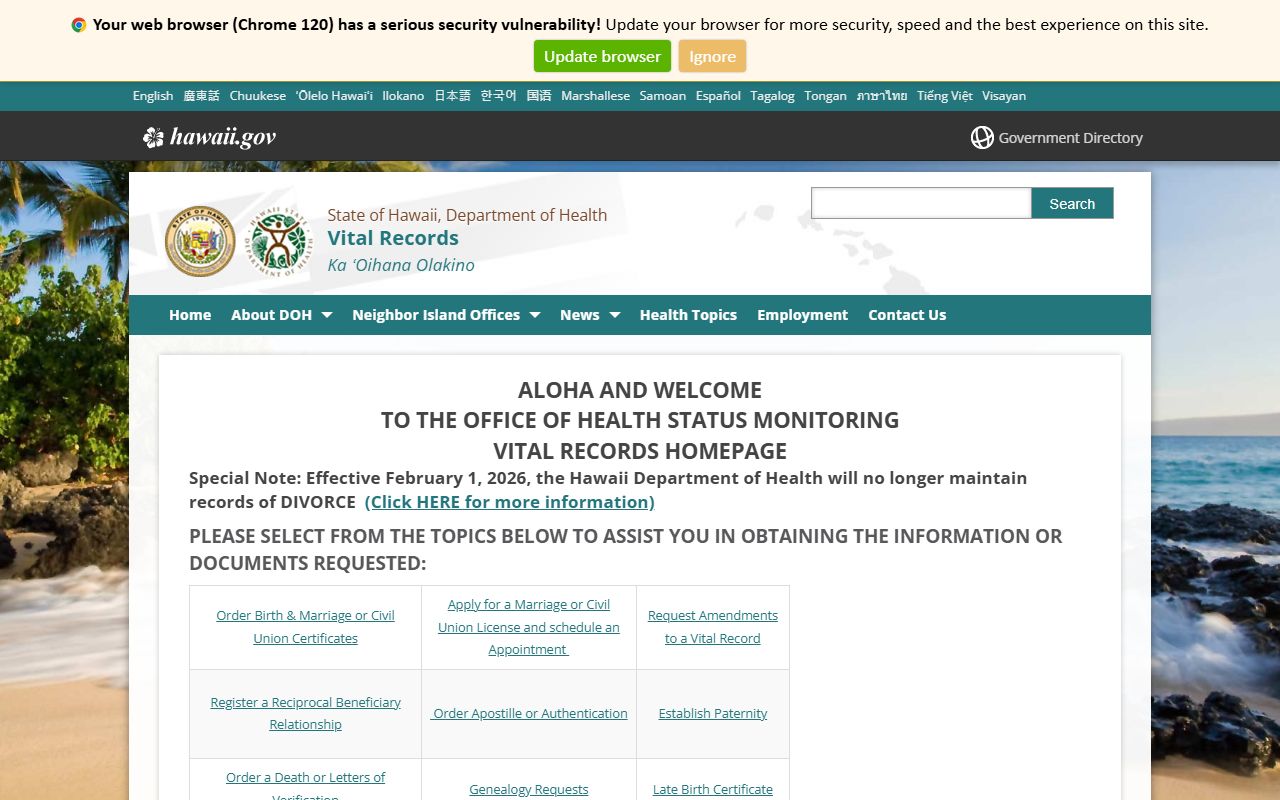
The same office also runs the online portal at vitrec.ehawaii.gov, where debit and credit card orders come in. The site has tools to track orders and upload IDs.
Note: A Hawaii people search for vital records takes ID. Only the named person, a close family member, or a legal agent can pull a certified copy.
Hawaii People Search Court Records
Court records are a core part of any Hawaii people search. The Hawaii State Judiciary runs eCourt Kokua, a public site that lists traffic, criminal, civil, land court, and tax appeal cases from across the state. Case data comes from District Court, Circuit Court, and Family Court dockets. You can look by name, case number, or citation. Social Security numbers and other ID data get stripped before the record shows up in a public view.
eCourt Kokua is free to browse. To pull a PDF of a filing, you pay $3 per document or 10 cents per page, whichever is higher. A quarterly pass is $125. A one-year pass costs $500. Older files have limits. Traffic cases before November 1995 are not in the system. District Court criminal files before August 2012 are not in it. Appellate files before September 2010 are not in it. These limits bear on any Hawaii people search that reaches back into the 1990s or earlier.
This screen shows the eCourt Kokua landing page where most court-based people search work starts. Visit courts.state.hi.us to run a docket check.

When a docket entry shows a small PDF icon, the file is ready to buy online. The service sits under Hawaii Revised Statutes Chapter 92F, the state's open records act.
To run an eCourt Kokua Hawaii people search you need:
- Full name of the person
- Case type, if you have it
- Filing county or circuit, if known
- Approximate year the case was filed
- Citation number or case number, when it exists
Hawaii People Search for Criminal History
For adult conviction data, the Hawaii Criminal Justice Data Center (HCJDC) runs eCrim. This is the tool most people pick when a Hawaii people search needs a criminal side. The HCJDC issues the report that locals call a "Police Clearance" or "Police Abstract." Only adult convictions show up. Arrest data that did not end in a conviction stays off-limits to the public. Chapter 846, HRS, sets the rules for what can be shared.
An eCrim name search costs $5. The system lets you reuse a paid search within the same login. An official certified report costs $12 and comes out notarized at no extra charge. You can also walk in to a Public Access Site for $25 per printout. A mail request costs $30. Fingerprint checks cost $55 in person or $35 by mail. Questions on data go to (808) 587-3279. Questions on the site go to (808) 695-4620.
Here is the HCJDC criminal history page that runs the eCrim portal. Use ag.hawaii.gov/hcjdc to start a paid name search.
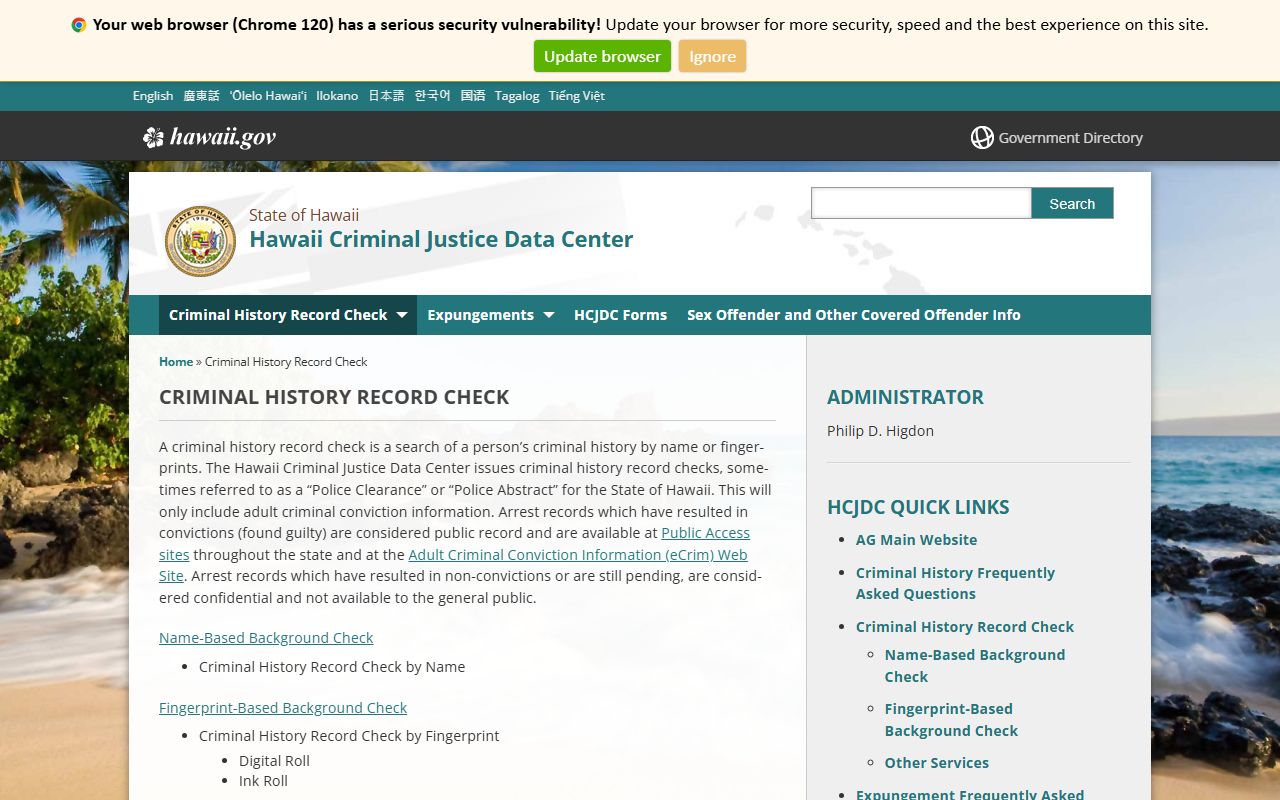
The center is at 465 South King Street, Room 101, in Honolulu. The public access terminal sits in the same suite. A walk-in is the only way to get a same-day printout of an eCrim report.
The Honolulu Police Department posts daily adult arrest logs for Oahu. Each log lists the name, age, charge, and booking time of each person taken in that day. Logs stay on the site for 14 days, then rotate out. For older data, a formal request goes to the Records Division. Federal and military arrests do not show up on the HPD log.
This is the HPD arrest log page, a common stop in a Hawaii people search on Oahu. See honolulupd.org/information/arrest-logs for the live feed.
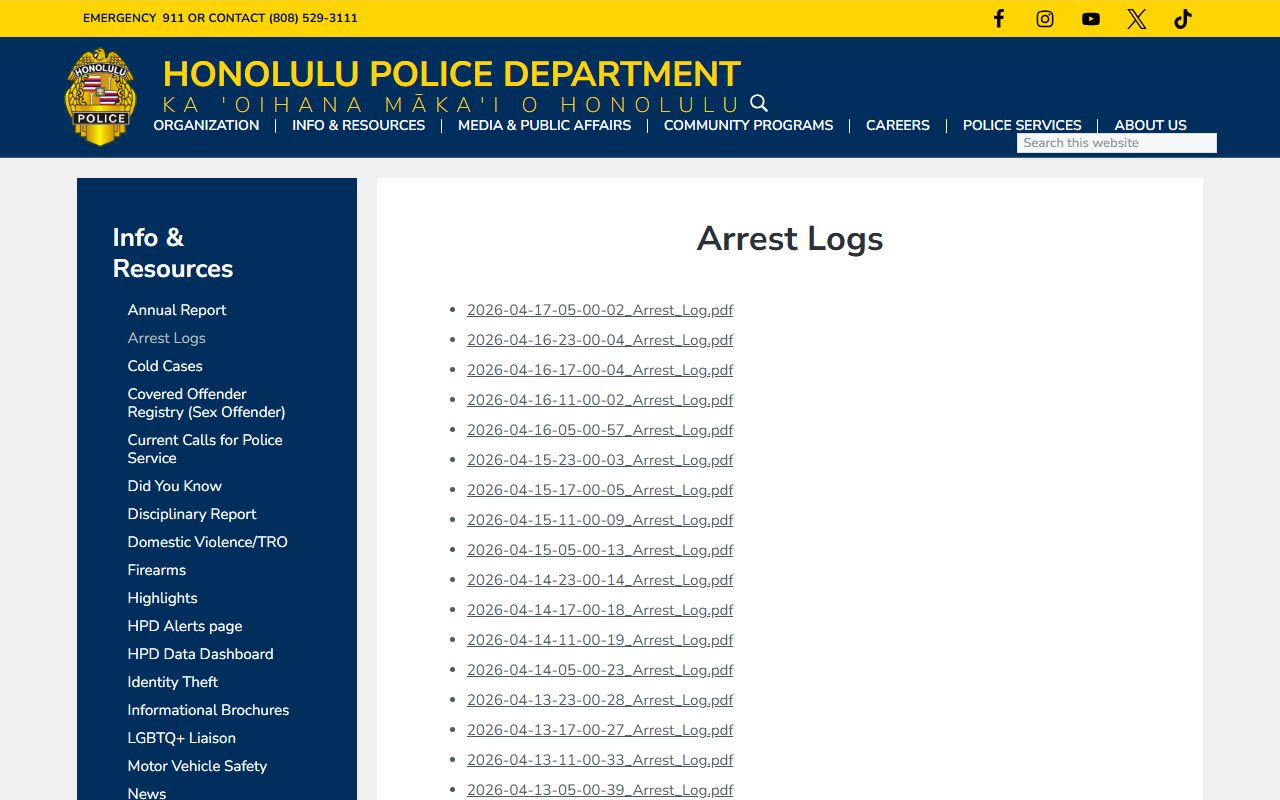
HRS § 803-5 covers arrest authority in Hawaii. The log gives a quick look at who was booked in the last 14 days, but it is not a full record.
Heads up: A Hawaii people search that shows an arrest does not mean the person was found guilty. The HCJDC eCrim report is the only state-issued conviction check.
Covered Offender Registry
The HCJDC also runs the Hawaii Covered Offender Registry. Chapter 846E, HRS, sets the rules. Offenders must check in with the chief of police within three working days of arriving in a new county. A Hawaii people search can be run on the registry by first name, last name, street, city, radius, or zip code. The site is at sexoffenders.ehawaii.gov. It updates every night.
Lifetime listing is the rule for most covered offenders. A court petition can end that duty in some cases. Public access terminals sit at HCJDC and at each major county police department, including those in Honolulu, Maui, Kauai, Hilo, and Kona.
Offender status and inmate status feed into the Hawaii SAVIN system. Victims can sign up for free phone, email, or text alerts. The tool sits at hawaiipolice.gov/services/inmate-information.
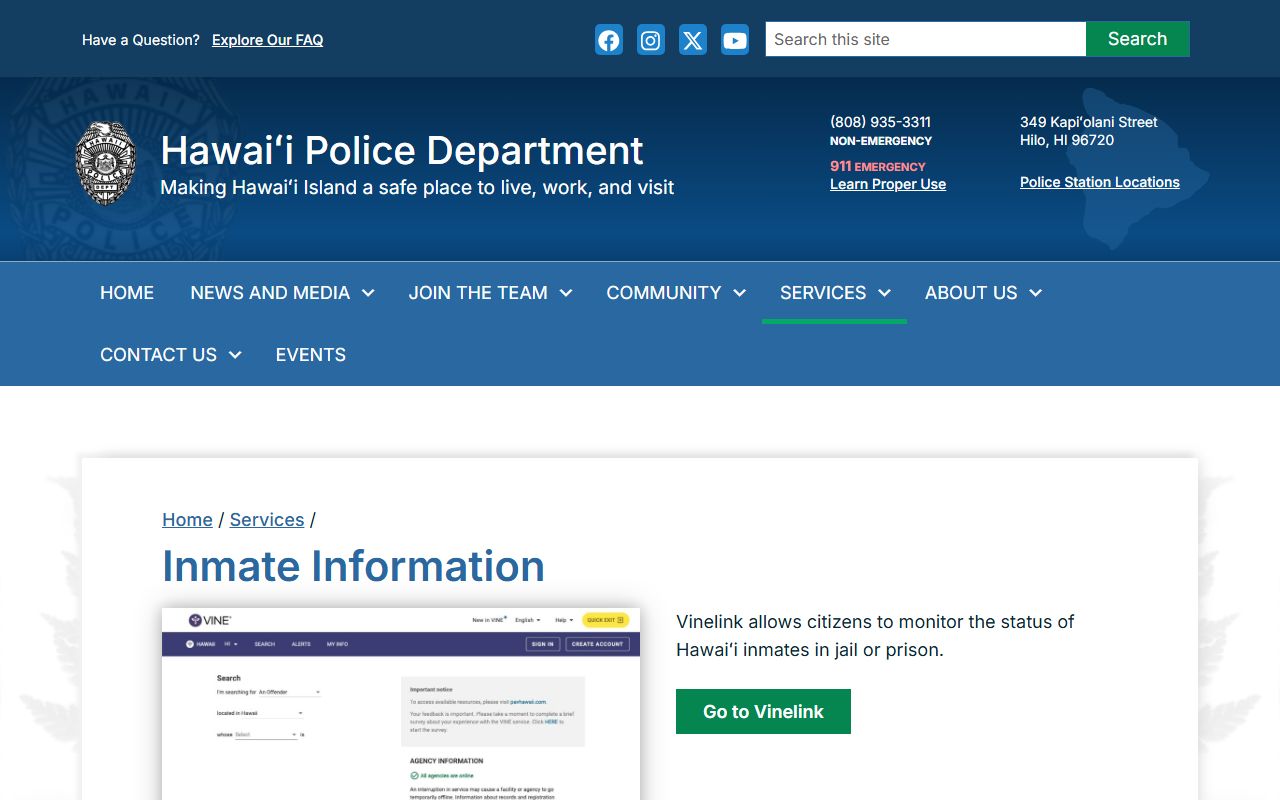
SAVIN is free and does not record who ran the check. It works for anyone, but victims of crime get the most use out of it.
Hawaii People Search by Property Record
Property files are one of the fastest ways to run a Hawaii people search. The state is one of only two in the nation that uses a single state-wide recording system. The Bureau of Conveyances handles more than 344,000 Regular System and Land Court documents each year. You can search by address, owner name, owner phone, owner email, or Tax Map Key (TMK). The office is at 1151 Punchbowl Street, Honolulu, HI 96813.
Recording fees are $51 for the first page and $12 for each added page. Document downloads from the online system cost extra. Chapter 502, HRS, sets the rules for recording. Search access is free at boc.ehawaii.gov.
Each county also runs its own real property tax site. Honolulu County uses qPublic. You can enter part of an address to widen the pool. TMKs can be typed with or without dashes. The system shows land value, building value, sales, exemptions, and a ten-year history.
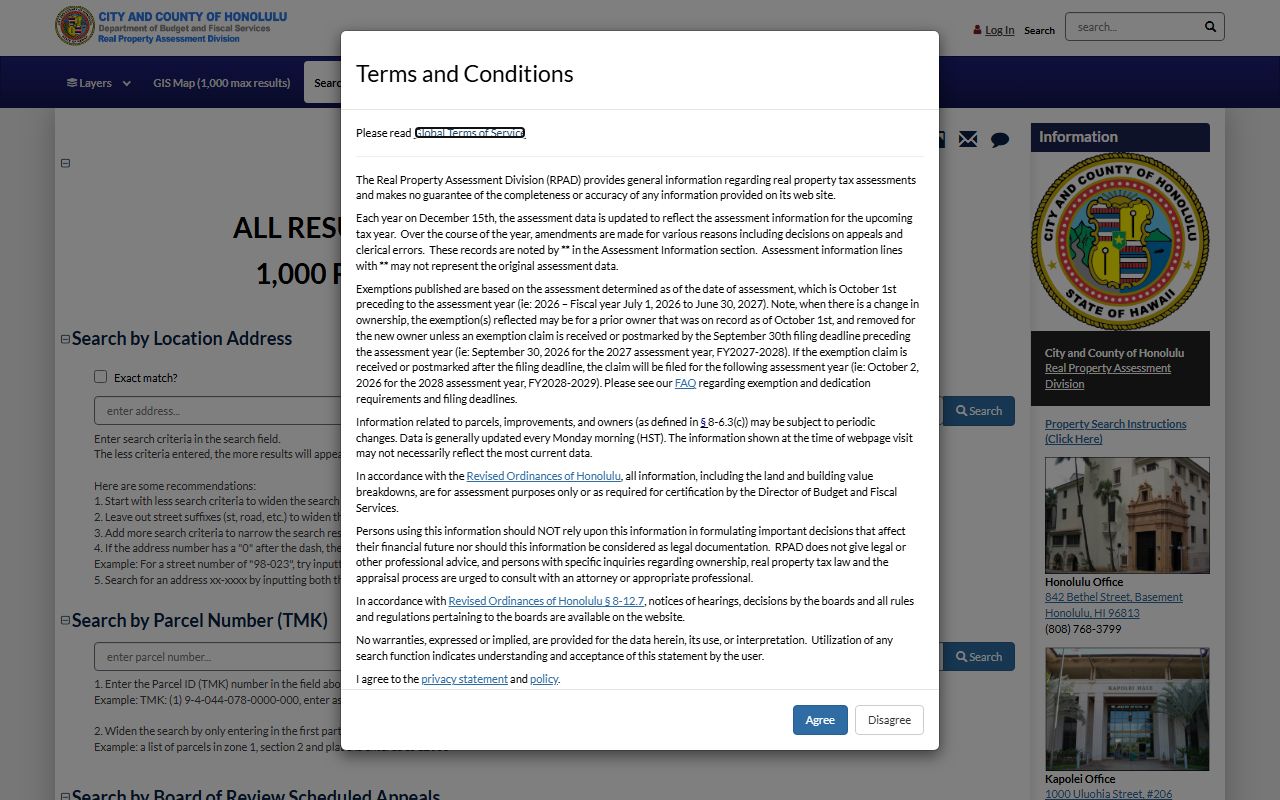
Try qpublic.schneidercorp.com for Honolulu parcel data. The secure portal at realpropertyhonolulu.com is the one to use to pay taxes or claim a homeowner exemption.
Below is the Honolulu property tax portal, which links each parcel to the owner of record.
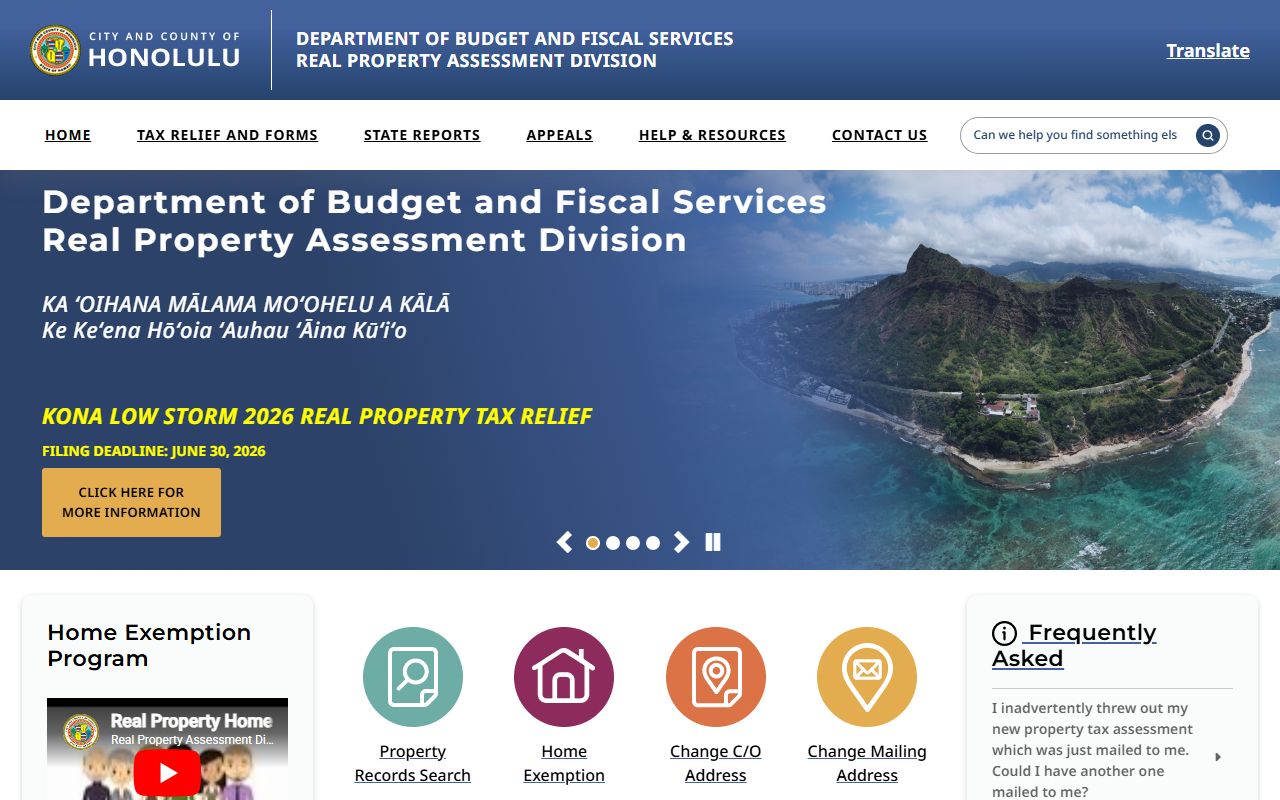
A quick name search will pull every Honolulu parcel tied to that owner. It is a good way to cross-check an address.
Maui County uses its own qPublic site. Owner names here read last name first. The search supports partial matches and an "Exact match" option.
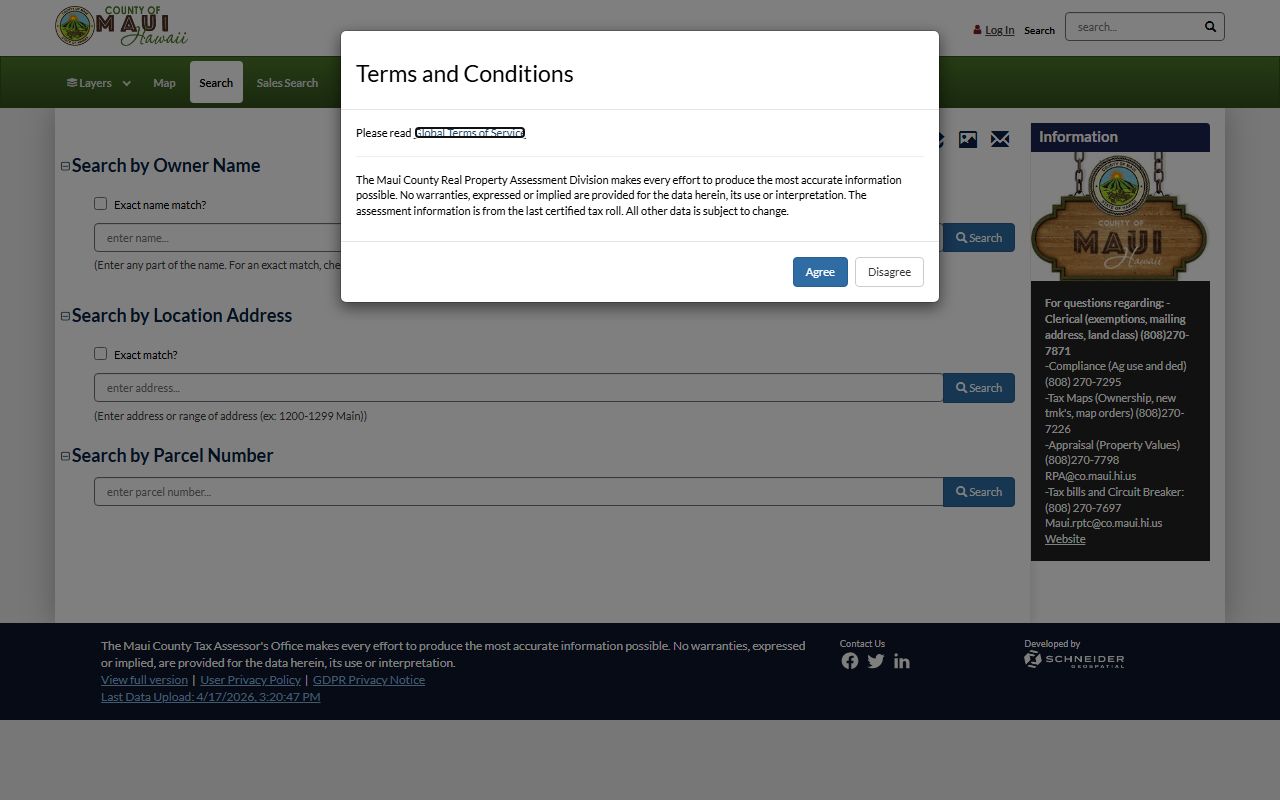
Try qpublic.schneidercorp.com/MauiCountyHI for Maui parcel data. The record shows tax class, land value, building value, and sales history.
Hawaii County, on the Big Island, also uses qPublic for its parcel search. Big Island TMKs start with a 3. The format is Zone-Section-Plat-Parcel-CPR.
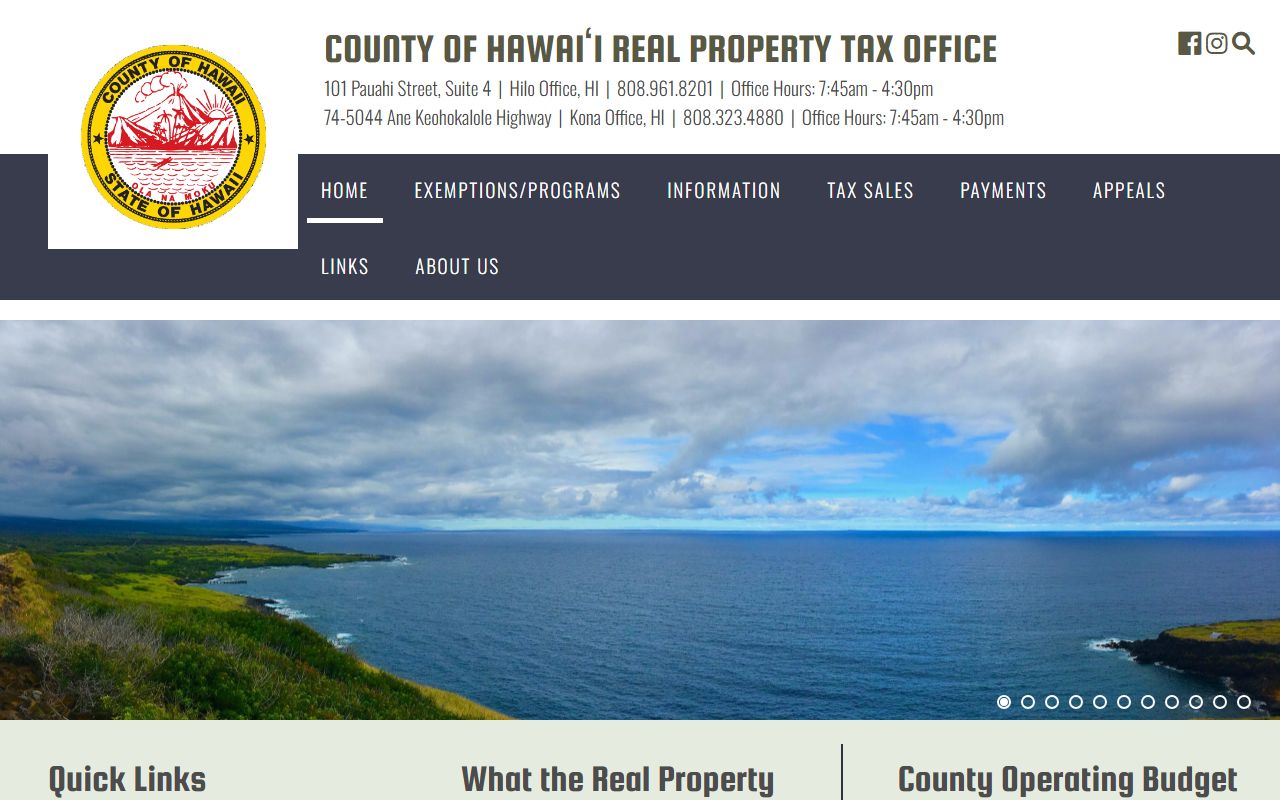
Search at qpublic.net/hi/hawaii. The office sits at 101 Pauahi Street, Suite 4, in Hilo, phone (808) 961-8201.
Hawaii People Search and Open Records
Hawaii's open records act is known as the Uniform Information Practices Act, or UIPA. It is found at Chapter 92F of the Hawaii Revised Statutes. UIPA rules most of the public records work in the state. HRS § 92F-11 sets the right of access. HRS § 92F-13 lists the main outs, including a privacy shield. Under UIPA, all state and county agency records are open unless the agency can show a clear reason to hold them back.
The Office of Information Practices (OIP) runs UIPA. The OIP writes formal opinions, trains staff, and helps people file requests. A valid UIPA request must be in writing, must have contact info, must name the record, and must ask for a format. Agencies have ten business days to reply. Fees are $0.25 per page and $2.50 per 15 minutes of search or review, with the first hour free.
The OIP website runs the model request form. Start at oip.hawaii.gov to file a UIPA ask.
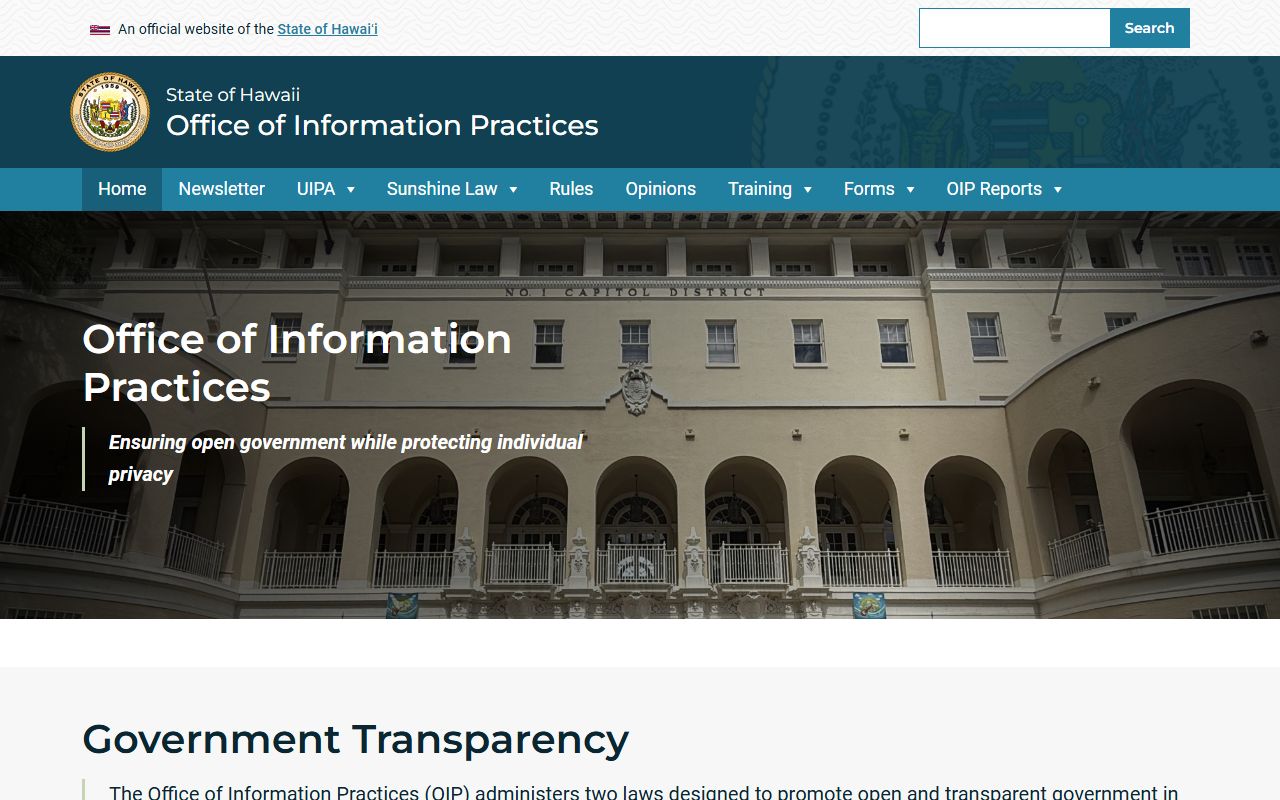
The office phone is (808) 586-1400. The office is at 250 South Hotel Street, Suite 107, Honolulu, Hawaii 96813. A Hawaii people search that runs through UIPA can reach almost any state or county file.
Statewide law enforcement also plays a role. The Hawaii Department of Law Enforcement runs the Sheriff Division and the Narcotics Enforcement Division. The Sheriff Receiving Desk is the only state unit that can book arrests outside of the county police. Sheriff records sit at (808) 587-5121.
The main site is law.hawaii.gov. The division protects state facilities and moves people in custody between courts.
Older Records and Family Search
For a Hawaii people search that runs deep into the past, the Hawaii State Archives and the Ulukau Hawaiian Electronic Library hold the main index. Statewide birth and marriage records started in 1842. Death data started in 1859. Few records exist before 1896. Broad record-keeping did not really take hold until 1929. FamilySearch has microfilm of births from 1896 to 1919, marriages from 1884 to 1919, deaths from 1896 to 1919, and burials from 1861 to 1892.
Ulukau has genealogy indexes that go even deeper. These cover marriages from 1826 to 1929, divorce case files from 1848 to 1915, probates from 1847 to 1917, wills from 1852 to 1916, naturalization from 1844 to 1894, denization from 1846 to 1898, and passports from 1845 to 1874. These are free to browse. See familysearch.org/en/wiki/Hawaii_Vital_Records for the record guide.
A Hawaii people search that aims at an older line often needs more than one source. The state archive has manuscripts. The county clerk has plat books. The Department of Health has the certified index.
Tip: For births and marriages before 1929, plan on reading microfilm. Many records are hand-written and indexed by book and page.
How Hawaii People Search Data Ties Together
A full Hawaii people search often walks through five or six sources. A name goes into eCourt Kokua for court files. The same name goes into eCrim for convictions. The covered offender registry gets checked. The Bureau of Conveyances is next, for deeds and liens. County property sites fill in tax data. Arrest logs and SAVIN round out the file.
Every source has its own fee, form, and wait time. Most are free to browse. A certified copy costs extra. A mail request takes longer than a walk-in ask. A UIPA request to a state or county agency can reach files that do not sit on a public portal. The ten-day agency reply window is a firm rule under HRS § 92F-11.
Statutes worth noting for a Hawaii people search:
- HRS Chapter 92F, the UIPA, which controls most public records
- HRS Chapter 338, which runs vital records access
- HRS Chapter 846, which runs the HCJDC and eCrim
- HRS Chapter 846E, which runs the covered offender registry
- HRS Chapter 502, which runs the Bureau of Conveyances
- HRS Chapter 803, which sets rules on arrest
- HRS Chapter 831, which covers expungement of non-conviction arrests
Are These Records Public in Hawaii
Yes. Court files, deeds, arrest logs, and conviction data are all open under Hawaii law. UIPA is the main rule. Vital records have more shielding. A certified birth or marriage copy can only go to the named person, a close family member, or a legal agent, under HRS § 338-18.
Some parts of a Hawaii people search stay closed. Juvenile court data is shielded. Arrest data that did not lead to a conviction is shielded. Sealed cases do not show up on eCourt Kokua. Social Security numbers and account numbers are stripped from all public files. A court order can seal other data if there is a strong reason.
Most Hawaii people search data is open. Juvenile, non-conviction, and sealed case data stays off-limits.
Hawaii People Search by County
Each of Hawaii's five counties keeps its own court, clerk, and police files. Pick a county below to find the local offices, phone lines, and online portals for a Hawaii people search.
People Search in Major Hawaii Cities
Oahu, Maui, Kauai, and the Big Island all have cities with their own stations, courts, and clerks. Pick a city to find the closest office for a Hawaii people search in that area.